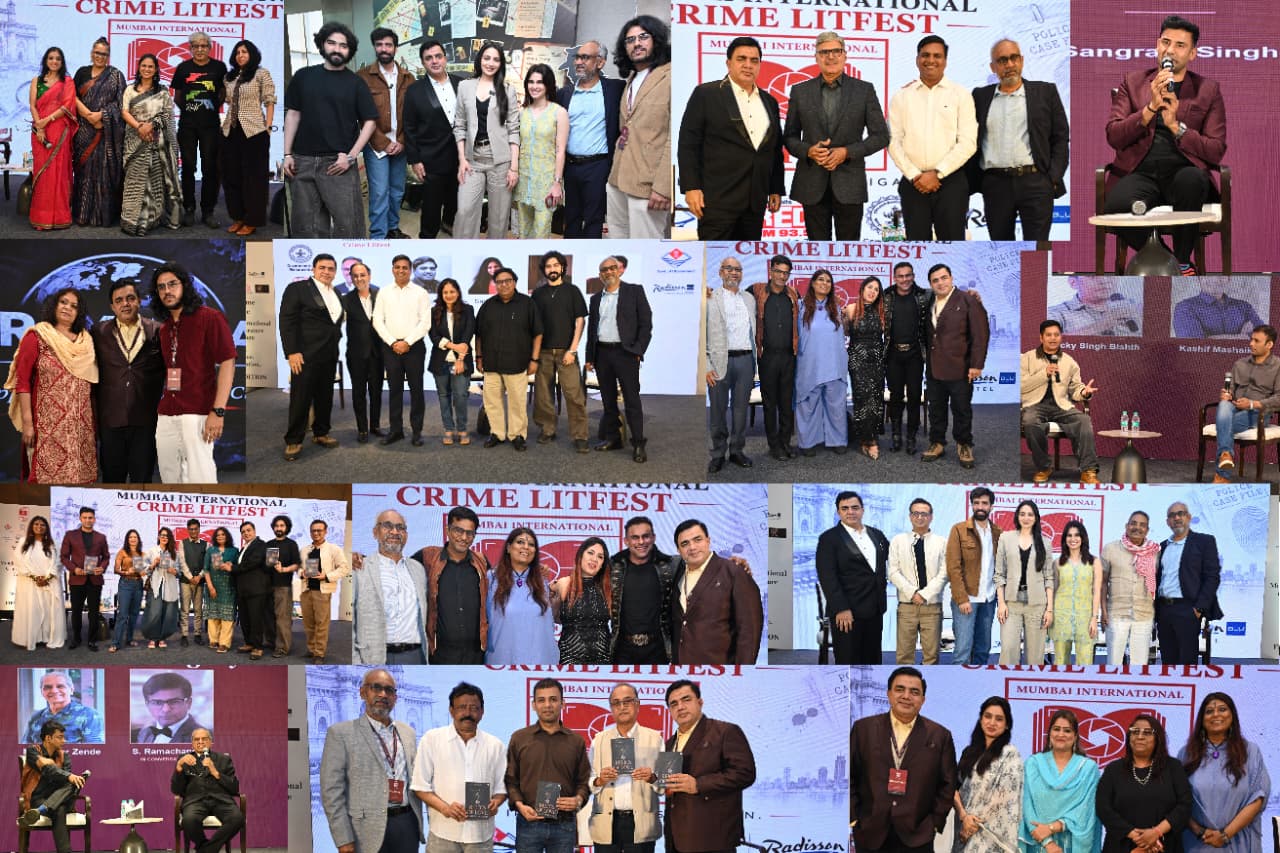
From Ram Gopal Varma and S. Hussain Zaidi to ACP Madhukar Zende, Rahul Bhatt and the daughters of Mumbai's former underworld dons, the two-day festival explored the fascinating intersection of crime, cinema, investigation and inherited identities.
Mumbai has lived with crime in its headlines, history and cinema. But what happens when those who investigated notorious criminals, recreated their lives on screen and inherited the consequences of their actions come face to face? The inaugural Mumbai International Crime Literature Fest 2026, held on November 14 and 15 at Radisson Blu, Marol, offered some startling answers.
Presented by Gray Atlas Media, with celebrated investigative journalist and bestselling author S. Hussain Zaidi at its creative forefront, the festival brought together writers, filmmakers, actors, police veterans and journalists for two days of revelations, uncomfortable truths and unexpected humour. Conceived through the collaboration of Zaidi and his longtime journalist friend Chandramohan Puppala, the gathering explored crime beyond sensational headlines.
Among its most riveting voices was legendary ACP Madhukar Zende, who captured international criminal Charles Sobhraj. His revelation that he had solved cases throughout 37 years of police service without firing a single bullet challenged cinema's trigger-happy portrayal of policing. Intelligence, patience and public cooperation, he demonstrated, could prove more powerful than firearms.
Filmmaker Ram Gopal Varma, whose Satya and Company transformed the cinematic portrayal of Mumbai's underworld, joined former Delhi Police Commissioner Neeraj Kumar and Zaidi for Busting the Dawood Myth. Kumar revealed that he believed he could have persuaded Dawood Ibrahim to surrender but for difficult preconditions. Varma recalled an intriguing Karachi taxi encounter and declared that even imprisonment would be a small price for interviewing Dawood. Their conversation questioned how much underworld mythology originated in reality and how much was manufactured by popular culture.
Perhaps the most emotionally charged session was Teen Deviyan, featuring the daughters of former underworld dons Yusuf Patel, Haji Mastan and Arun Gawli. Curated by Dr (Hon) Anusha Srinivasan Iyer, the conversation moved beyond notorious surnames to the women who inherited them. Their childhood memories, personal struggles and attempts to establish independent identities raised an uncomfortable question: should children forever carry the burden of their fathers' actions?
Equally compelling was Beyond Headley, featuring Rahul Bhatt in conversation with Dr (Hon) Anusha Srinivasan Iyer. Revisiting the disturbing circumstances surrounding David Headley and the 26/11 Mumbai terror attacks, the discussion explored how seemingly ordinary associations can acquire devastating implications, leaving individuals confronting suspicion, scrutiny and consequences they never anticipated.
Zaidi's opening keynote established the festival's larger purpose: examining the responsibility of storytelling where documented crime, public memory and cinematic imagination intersect.
Literature remained central to the proceedings. Crime: The Eternal Genre brought together Ashwin Sanghi, Rakesh Goswami, Bilal Siddiqui and Sarita Patil, moderated by Nikhil Sharma, exploring humanity's enduring fascination with deception, danger and justice.
From Page to Performance featured Avinash Tiwary, Zoya Afroz, Vineet Kumar, Aisha Ahmed and Abhijeet Deshpande, examining the transformation of written characters into screen performances. Tiwary reflected on deliberately stripping glamour from a gangster-inspired character to prevent audiences from romanticising criminality.
Murder She Wrote brought filmmaker Sriram Raghavan together with Smita Singh, Reshu Nath and Aparna Purohit, moderated by festival director Ankita Kumar, exploring complex female characters and changing representations of women in crime narratives.
Real-life investigations provided equally gripping material. Padma Shri K. Vijay Kumar's Chasing the Brigand, in conversation with Rakesh Goswami, revisited the pursuit of Veerappan. Former Delhi Police officer and world champion wrestler Sangram Singh addressed public awareness and citizen responsibility in How Citizens Can Keep Crime at Bay.
Humour in Homicide, featuring Jasmeet K. Reen, Kirti Kulhari, Bilal Siddiqui and Abhijeet Deshpande, moderated by S. Ramachandran, explored how wit can coexist with dark storytelling without trivialising victims' suffering.
Investigative journalist Harinder Baweja appeared in conversations with Ankita Kumar and, alongside Neeraj Kumar, in In Pursuit of Their Quarry, moderated by Zaidi. Lucky Singh Bisht's conversation with Kashif Mashaikh, Professor Bodi Satya's The Greek Mafia and discussions on mythology and organised crime broadened the festival's perspectives.
Page to Screen featured Milap Zaveri, Milee Aishwarya, Bilal Siddiqui and Pooja Changoiwala, who also participated in From Journalism to Crime Fiction. Book launches included Rakesh Goswami's with S. Ramachandran and Sriram Raghavan, and Kashif Mashaikh's launch by Ram Gopal Varma. Harinder Baweja's book signing and Mashaikh's The Evolving Formats added further literary dimensions.
What distinguished the festival was its willingness to confront contradictions. A filmmaker's imagination met a police officer's experience. A journalist's documented history encountered a daughter's private memories. Behind notorious criminals emerged questions of justice, inherited stigma, morality and the responsibility of storytelling.
For the chief promoter, Chandramohan Puppala and the organising team, the inaugural edition established a compelling platform where literature confronted lived reality.
Its defining identity, Ink. Intrigue. Investigation., captured that ambition.
As the gathering concluded, one truth lingered. Crime may give cinema its most compelling villains and literature its most gripping plots, but reality is invariably more complicated than fiction.
And sometimes, the most shocking revelations are not about what criminals did, but about what their actions left behind.